Beyond the Fabric: A Wholesaler’s Technical Audit for Sourcing Commercial-Grade Shade Sails
Beyond the Fabric: A Wholesaler’s Technical Audit for Sourcing Commercial-Grade Shade Sails
Introduction: The Hidden Costs of "Budget" Shade Sails
The 3 "Black Boxes" of Longevity: Industrial Asymmetry Exposed
The gap between a premium-grade sail and a cheap disposable one lies in details many factories intentionally hide during quoting.
1. Heavy Duty Shade Sail Fabric Assessment: Virgin HDPE vs. PVC
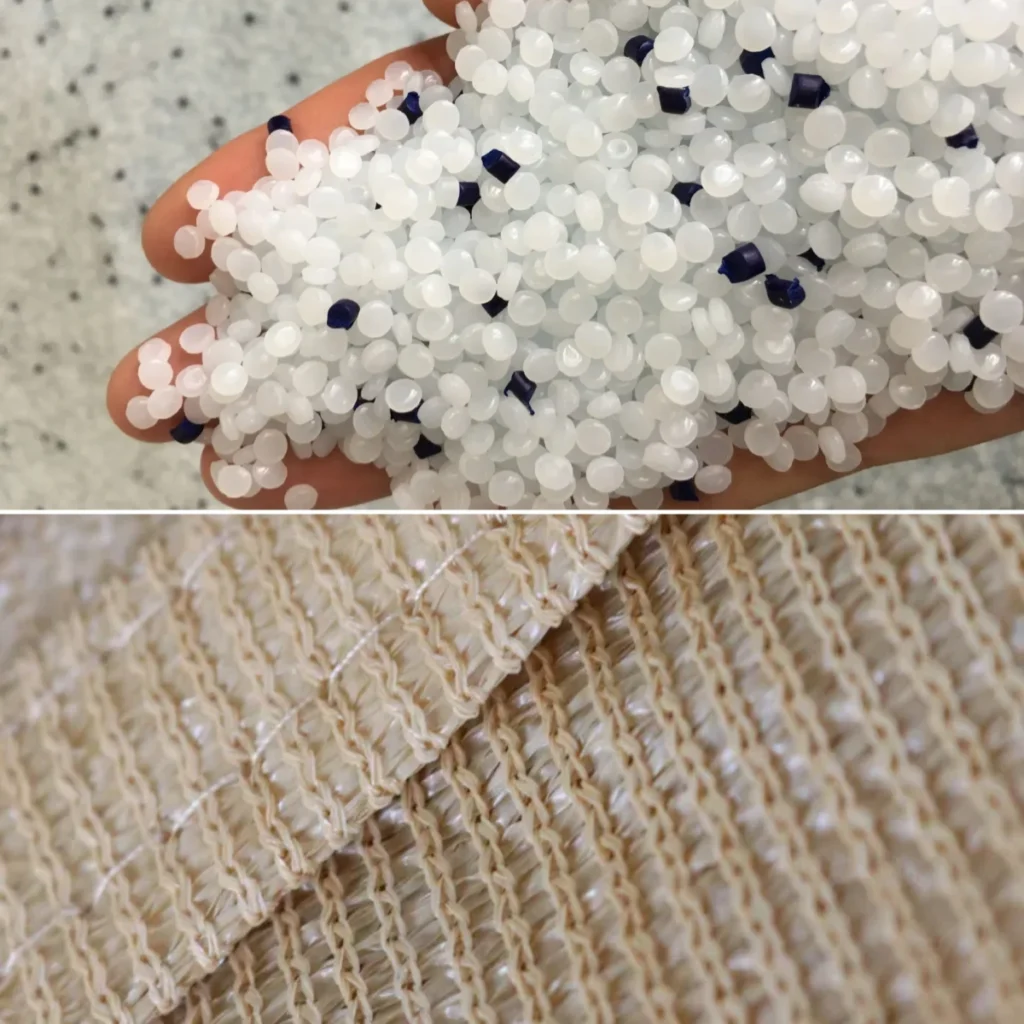
Forget the fancy molecular jargon sales reps throw at you—we test shade sail fabric with two no-nonsense checks: the stretch test and the burn test. Pure, high-density virgin HDPE—made from food-grade resin pellets with built-in UV stabilizers—stretches evenly and burns with a clean, mild paraffin-like flame. Recycled waste, often mixed into cheap batches, shows its true colors when stretched (it turns white) or burned (it releases acrid black smoke).
2. The Craftsmanship Trap: Stitching, Hardware, and the "Invisible" Details
Shade sails are half art, half engineering—and plenty of factories can make the fabric, but they can’t sew a sail that lasts. The difference between a sail that survives a typhoon and one that falls apart in light wind lies in these easily overlooked details:
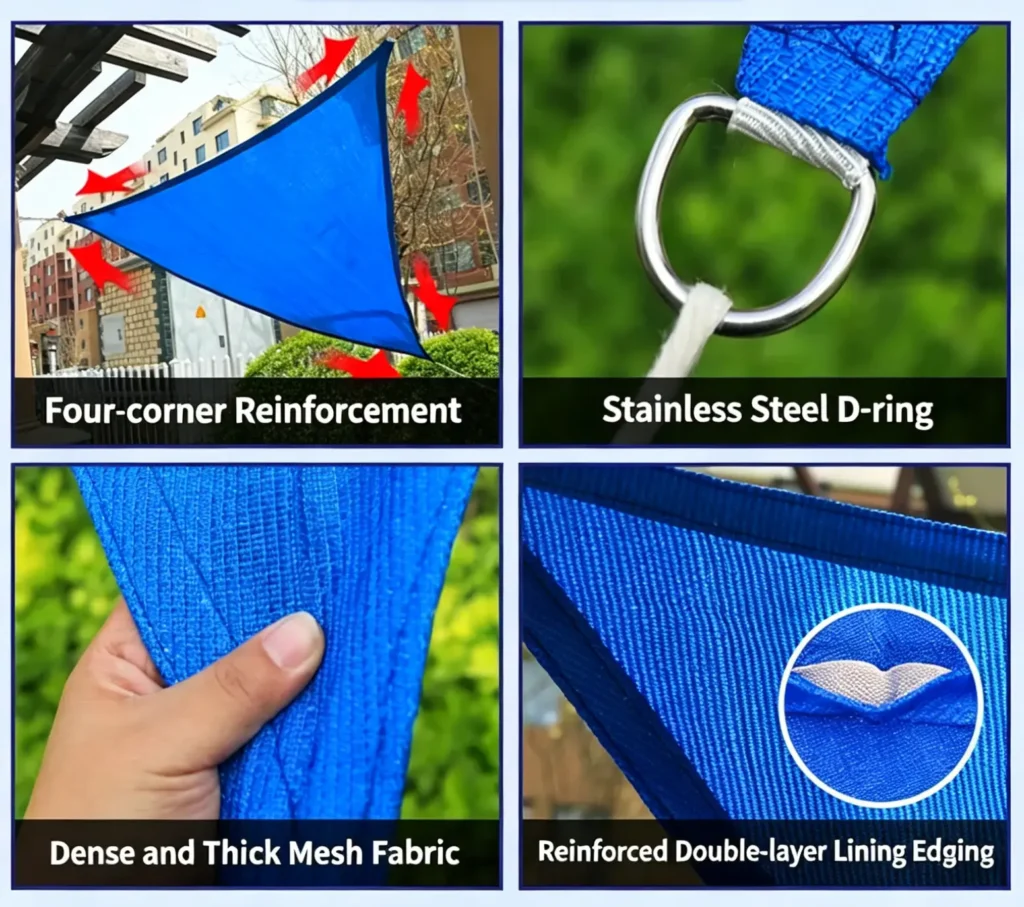
- Stitching & Reinforcement: Thick double-stitched lock-stitch seams, paired with a double-layer inner lining and reinforced webbing, prevent unraveling even under strong wind. We’ve seen factories skip half the stitches to save 2 cents per sail—those sails fray and tear within months.
- Concave Edge Design: Arched, concave sides aren’t just for looks—they spread tension evenly across the sail, reducing wear and tear under wind loads. Straight-edged sails, by contrast, are prone to sagging and tearing prematurely.
- Hardware: Thickened stainless steel D-rings are non-negotiable. They’re waterproof, rust-resistant, and built to handle high-tension installations. For coastal or humid areas, we always recommend 316-grade stainless steel to fight saltwater corrosion.
During an audit for a Singapore-based client, we found a factory coating cheap steel rings with clear lacquer, then labeling them “marine grade.” Our salt spray test showed they rusted completely in less than a month. This isn’t a rare scam—it’s standard practice in the lowest bidding tiers. For larger commercial projects like restaurant patios, parking lots, and pool decks, many wholesalers also pair shade sails with commercial shade netting to create layered, high-coverage shade solutions.
3. The UV Stabilizer Secret: A Game of Percentages
UV stabilizers are the first thing factories cut to save money. The industry’s dirty trick? Labeling sails “UV treated” with only 0.5% stabilizer—just enough to pass a basic lab test, but not enough to last one tropical summer.
| UV Concentration | Projected Service Life | Primary Geographic Market |
|---|---|---|
| 1.0% UV | 1–2 Years | Temperate Northern Latitudes |
| 3.0% UV | 3–5 Years | Tropical Monsoon Zones |
| 5.0% UV | 7+ Years | High-Irradiation Desert/Coastal Areas |
These percentages aren’t just numbers on a spec sheet. We’ve tested sails with 1% UV stabilizer in Thailand’s monsoon heat—they turned brittle and tore within 12 months. For tropical markets, 3% is the absolute minimum, and 5% is what we recommend for long-term use.
The Wholesaler’s "Zero-Risk" Checklist
- Before you send a wire transfer, test every sample with these six no-nonsense checks:
- Burn & Stretch Test: Virgin HDPE burns clean with a mild paraffin-like flame and stretches evenly. Recycled material smokes black and turns white when pulled.
- Stitching Check: Verify every seam uses continuous double lock-stitch, with a reinforced inner lining. No shortcuts here.
- Hardware Corrosion Test: Insist on thick stainless steel hardware, with salt spray test reports for coastal projects.
- Edge Design Check: All sides must be arched and concave to spread tension evenly. Straight edges are a red flag.
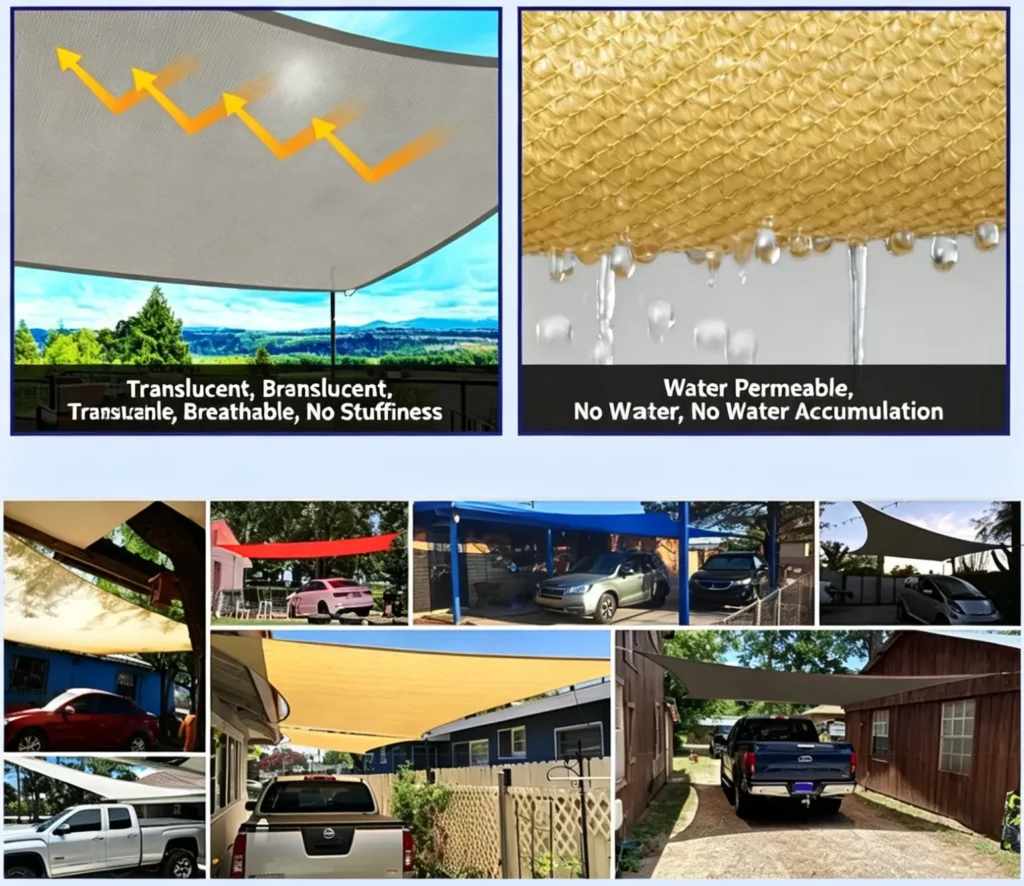
- Water Permeability Test: Pour water on the fabric—good HDPE lets it pass through freely, while cheap material traps water.
- Our Sourcing Promise: We audit every detail so you don’t have to. No factory ties, no hidden agendas—just quality you can trust.
Conclusion: Procurement is Risk Management
FAQ
What GSM and material should I look for in commercial shade sails?
For commercial use, we recommend 280–340 GSM virgin HDPE with built-in UV stabilizers. This density is thick enough to handle high tension, but still breathable and water-permeable. Lower GSM fabric often tears prematurely under wind or water weight, especially in tropical climates.
Why do concave edges matter on shade sails?
Concave, arched edges spread tension evenly across the sail, reducing sagging and tearing under wind loads. Straight-edged sails, by contrast, tend to flap and wear out fast, even in mild winds. It’s a small design detail that makes a huge difference in lifespan.
Can shade sails work in windy or coastal areas?
Absolutely—if you choose the right build. Look for double lock-stitch seams, reinforced corners, and thick stainless steel D-rings. For coastal areas, always go with 316-grade hardware to resist saltwater corrosion. The breathable fabric also prevents damage from pooled rainwater during storms.