
Coffee Drying Net: The Ultimate Solution for Post-Harvest Processing in Southeast Asia
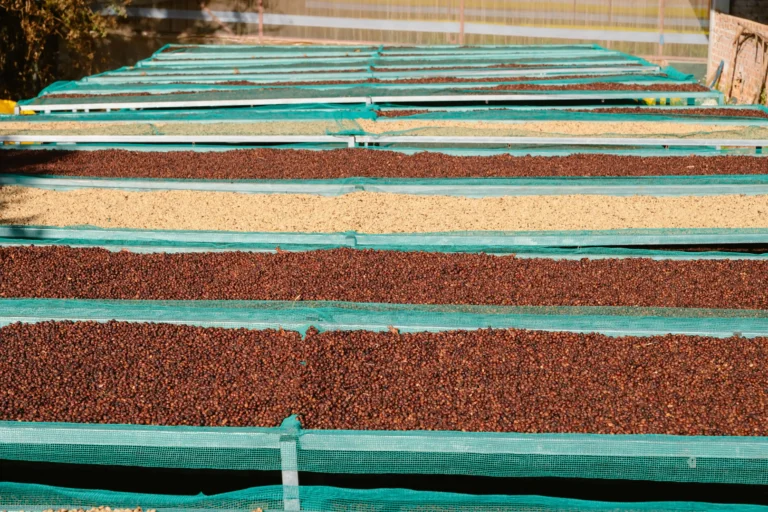
Coffee Drying Net: The Ultimate Solution for Post-Harvest Processing in Southeast Asia
In the world of specialty coffee, the harvest is only half the battle. The real transformation—where sugars stabilize and complex acidity is locked in—happens during the drying phase. For producers in Southeast Asia’s monsoon-prone belts, this stage is a high-stakes race against humidity, sudden downpours, and the chemical degradation caused by UV overexposure.
The solution isn’t just “a net.” It is a UV-stabilized HDPE coffee drying system engineered to regulate airflow while providing a physical barrier against the elements.
The High Stakes of the Drying Floor
Drying is arguably the most volatile period in coffee production. If the moisture content in the green beans doesn’t drop at a controlled, uniform rate, you risk losing the entire lot to mold or “off-flavors.”
In tropical climates, producers face a brutal paradox: you need the sun’s energy to drive out moisture, but too much direct radiation causes oxidation. This chemical breakdown strips the bean of its delicate floral notes, leaving behind a bitter, flat, or “woody” profile. Then there is the rain. A single unpredicted monsoon shower can rehydrate drying beans, sparking rapid fungal growth and effectively turning a premium crop into compost.
Technical Anatomy of the HDPE Drying Net
This isn’t standard garden mesh. Our specialized nets are designed to handle the specific mechanical and thermal stresses of a commercial coffee terrace.
1. Superior Breathability and Convection
Unlike solid plastic tarps that trap stagnant, moisture-laden air beneath the beans, our knitted lockstitch structure promotes active convection. Air moves through the mesh, carrying away evaporated moisture from the bottom of the pile. This 360-degree ventilation is the only way to prevent the “sweating” that leads to sour fermentation.
2. Industrial-Grade Load Capacity
Coffee is heavy. A wet harvest can weigh a staggering amount before the moisture evaporates. Our nets are reinforced with an integrated wire mesh layer, allowing a single 2.5m x 25m roll to support up to 2 tons of beans without sagging or structural failure.
3. Rapid Response Logistics
Time is the enemy when the clouds turn grey. These nets are designed for high-speed deployment. Because the HDPE material is lightweight and rollable, a small team can clear or cover a drying floor in minutes. It turns a labor-intensive panic into a streamlined routine.
The SK-ROPE Advantage: Sourced from Lizhuang
Our production facility is located in Lizhuang Town, the epicenter of China’s high-performance netting industry. This proximity to the global supply chain allows us to offer:
Precision UV-Stabilization: We use high-load chemical stabilizers that prevent the polymer chains from snapping under the equatorial sun, ensuring a 3–5 year lifespan.
Custom Geometric Options: Whether your drying tables are 10 meters or 100 meters, we provide custom widths and lengths to fit your specific infrastructure.
Consistency in Stock: Harvest season waits for no one. We maintain deep inventories to ensure global delivery exactly when the cherries start to turn red.
FAQ
How does the net prevent the "bitter" taste mentioned earlier?
Bitterness often stems from “sun-scorch” or rapid oxidation. By providing a calibrated level of shade during the drying process, the net ensures the beans cool down slightly, allowing the internal chemical stabilization to happen slowly and evenly.
Can I use this for "Honey Process" or "Natural Process" coffee?
Absolutely. In fact, it is essential. Honey and Natural processes involve high mucilage (sugar) content, which is incredibly sticky and prone to attracting pests or mold. The airflow provided by the HDPE mesh is critical for keeping these “sticky” beans aerated.
Is the material food-safe?
Our HDPE is an inert, non-toxic polymer. It does not leach chemicals into the beans, ensuring that the only thing your customers taste is the terroir of your farm.